GHK-Cu in a cartridge: separate the molecule from the delivery system
Two things need to be characterised
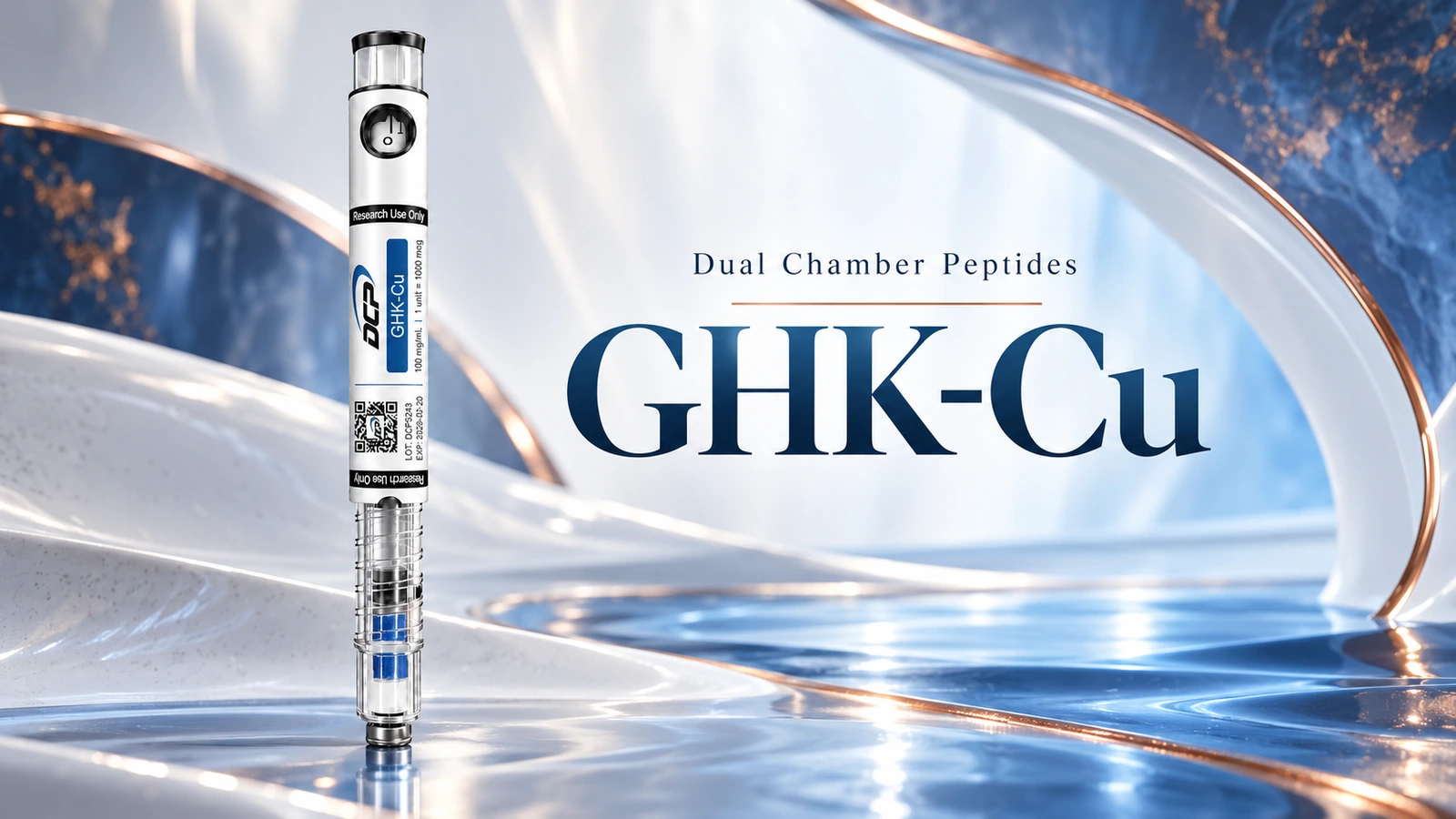
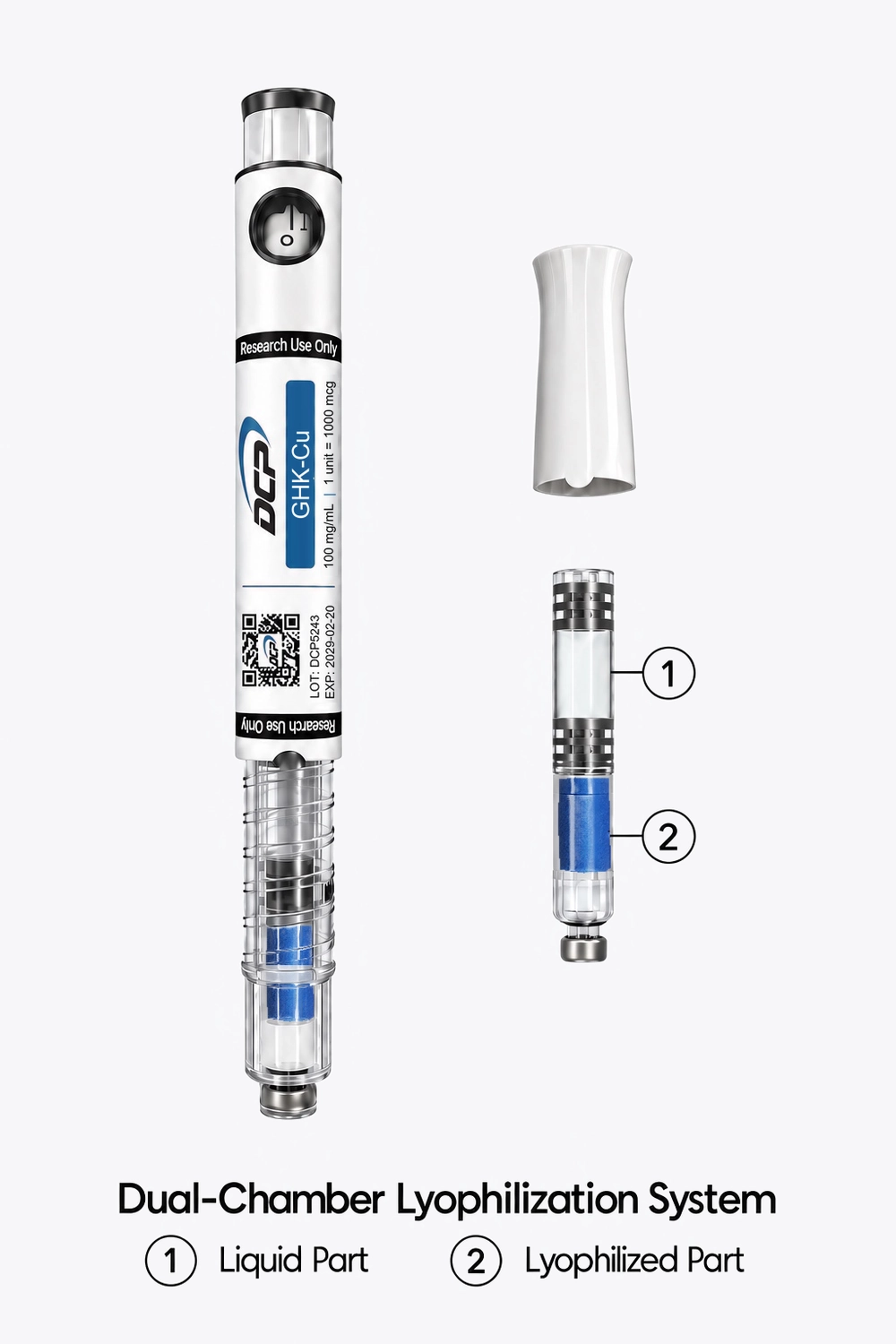
A GHK-Cu cartridge combines a chemical preparation with a delivery system. Evidence about one does not automatically establish the performance of the other. The compound’s identity and content need appropriate analytical documentation; the device needs information about preparation, compatibility and delivery.
Identity asks whether the material is the stated copper–peptide complex. Content asks how much is present. A chromatographic area percentage answers a narrower, method-dependent question about the detected chromatographic signals; it is not itself a measurement of content or proof of identity, sterility or endotoxin status.
What the biological literature contributes
GHK-Cu is a copper complex of a three-amino-acid peptide. Animal wound research has investigated extracellular-matrix formation following local exposure. That gives a biological starting point, but it is not a test of a commercial cartridge. Primary wound-model publication.
In that experiment, rats received sequential GHK-Cu injections into subcutaneous mesh wound chambers. Researchers measured the accumulation of matrix components at those sites. The endpoint concerns the tissue response within the model: it does not establish systemic rejuvenation, human tissue-healing efficacy or the performance of a different delivery system. Matching the compound name alone cannot bridge those gaps.
What changes after preparation
Once components are combined, the resulting liquid has its own composition and storage history. Relevant questions include whether the material remains in solution, whether its measured properties remain within specification, and whether it interacts with the container or device. Those questions require evidence for the particular preparation.
Appearance is only one observation. A clear liquid does not establish unchanged chemical identity or content. A meaningful stability assessment needs defined conditions, time points and analytical methods capable of detecting the changes relevant to that formulation. The existence of a separated-component format does not, by itself, establish a shelf life after mixing.
Likewise, a device setting is not itself a laboratory measurement of delivered content. The relationship between a setting, delivered volume and concentration should be established for the system being described. Even verified delivered content would remain distinct from the amount reaching a biological target.
Read the documentation as separate answers
A batch report, a stability study and a delivery-performance test answer different questions. Together they can characterise a product more fully; none alone demonstrates a therapeutic outcome. For an explanation of the format, see the dual-chamber explainer. For biological interpretation, keep the model and endpoint of the original study in view.
Explore the Products from This Article
All products are >99% purity, manufactured in a certified EU laboratory, with accompanying lab analysis.
Research Disclaimer
This article is for informational and research purposes only. The content is not intended as medical advice, diagnosis, or treatment recommendation.