Epithalon Identity: Separating the Molecule from Longevity Claims
Similar names do not establish equivalent materials
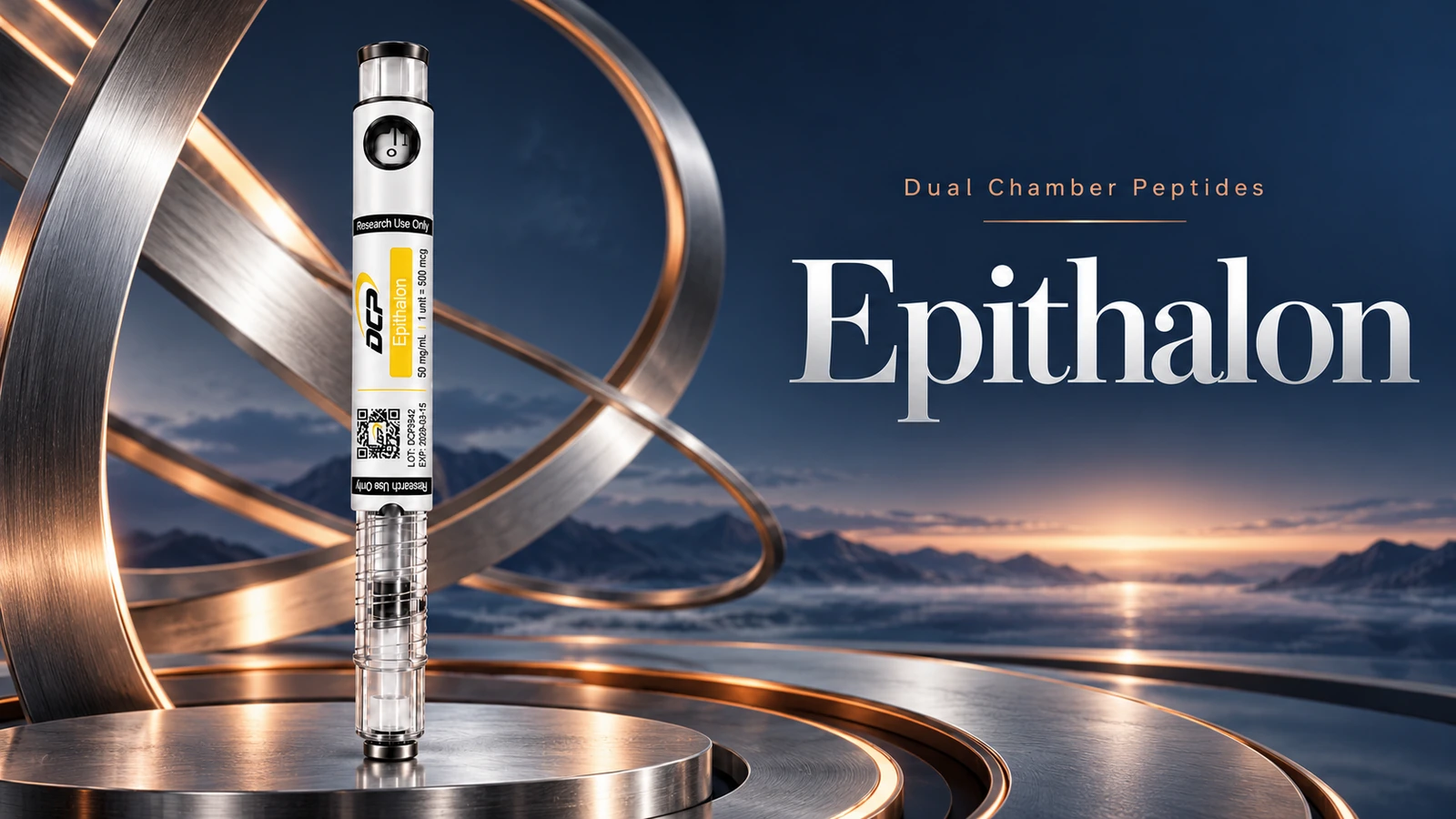
Epithalon is a defined synthetic peptide consisting of four amino acids: Ala-Glu-Asp-Gly. Epitalon and Epithalone are alternative spellings used for this molecule. Epithalamin, however, refers to a pineal-derived extract, not simply another spelling of the same synthetic compound.
This distinction changes how evidence should be read. An extract contains a different experimental material from an isolated tetrapeptide. Historical reports about pineal preparations cannot become evidence for synthetic Epithalon merely because the names and research programmes are related. In particular, long-term claims associated with extracts should not be presented as human lifespan results for Epithalon.
What the molecular study actually supports
The 2003 Epithalon study investigated human fetal fibroblasts in culture that initially lacked detectable telomerase activity. It reported telomerase activation and telomere elongation following exposure to the peptide.
Telomerase helps maintain repetitive DNA at chromosome ends. Showing a response in cultured fibroblasts therefore offers evidence about a cellular process under the study's conditions. It does not establish how an administered product distributes through a body or whether adult tissues respond in the same way.
The distinction is especially important for a peptide: placing material in a cell-culture environment bypasses many barriers encountered between administration and arrival at a target tissue. The experiment did not compare delivery systems, establish human bioavailability or measure longevity.
Identity, quantity and purity answer different questions
Connecting a research product to a published experiment starts with identifying what is present. A product name is not an analytical result, and nominal peptide content is not a measurement of cellular exposure.
Analytical questions include whether the material matches the intended peptide, how much peptide is present and which impurities the method can detect. Chromatographic area percentage describes the relative detector signal assigned to peaks under a particular method. It does not independently establish molecular identity, peptide mass, sterility or endotoxin status. The distinction is explained further in the guide to interpreting peptide purity testing.
Formulation creates another set of questions. Vehicle composition, container interactions and changes during storage require product-specific evidence. Neither the four-amino-acid sequence nor a high chromatographic area percentage proves that a formulation remains unchanged or delivers a particular tissue concentration. Packaging format cannot substitute for those measurements.
Later research does not remove the context
A 2025 cell-culture paper studied telomere-related endpoints, hTERT and alternative lengthening of telomeres in normal IBR.3 and HMEC cultures and cancer-derived 21NT and BT474 cultures. These are distinct biological settings, not interchangeable demonstrations of a beneficial response.
Telomere maintenance can enable cells to continue dividing, which is why a response cannot be interpreted as inherently restorative. The paper's correction replaced incorrect Figures 1–3; it was not a retraction. The corrected record should accompany discussion of its findings.
Three links that remain separate
A defensible interpretation needs three different connections: the tested material must match the intended compound; the formulation must produce a relevant exposure; and that exposure must improve a meaningful outcome. Evidence for one connection does not establish the others.
For Epithalon, the cited studies address cellular telomere biology. They do not validate a commercial formulation, show that a delivery format reproduces the experimental exposure or demonstrate longer human life. Keeping those boundaries visible makes the research more useful, rather than turning a molecular observation into a product promise.
Research Disclaimer
This article is for informational and research purposes only. The content is not intended as medical advice, diagnosis, or treatment recommendation.