Dual Chamber Cartridge vs Conventional Vial: A Research Workflow Comparison
Two ways to package the same material
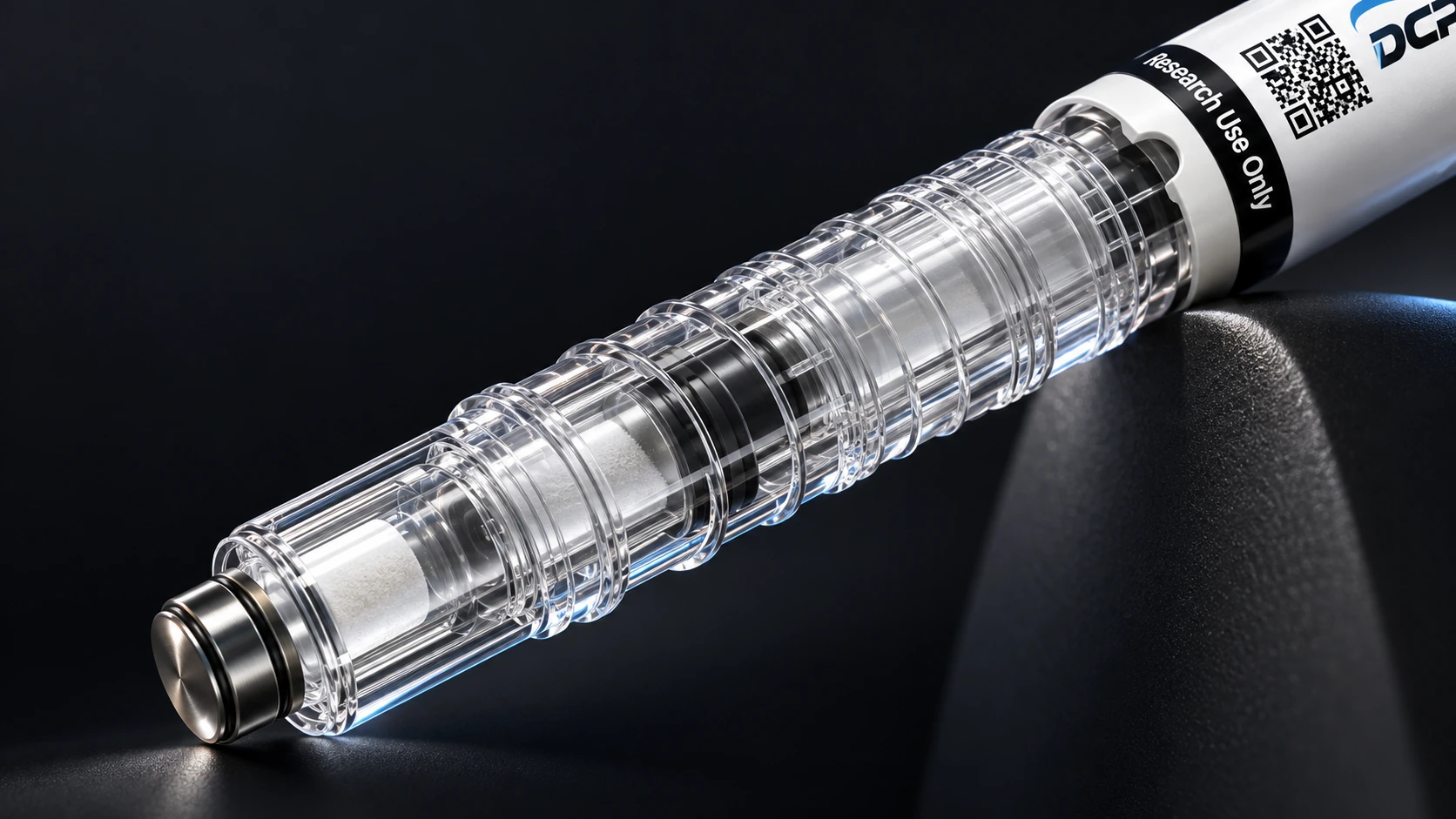
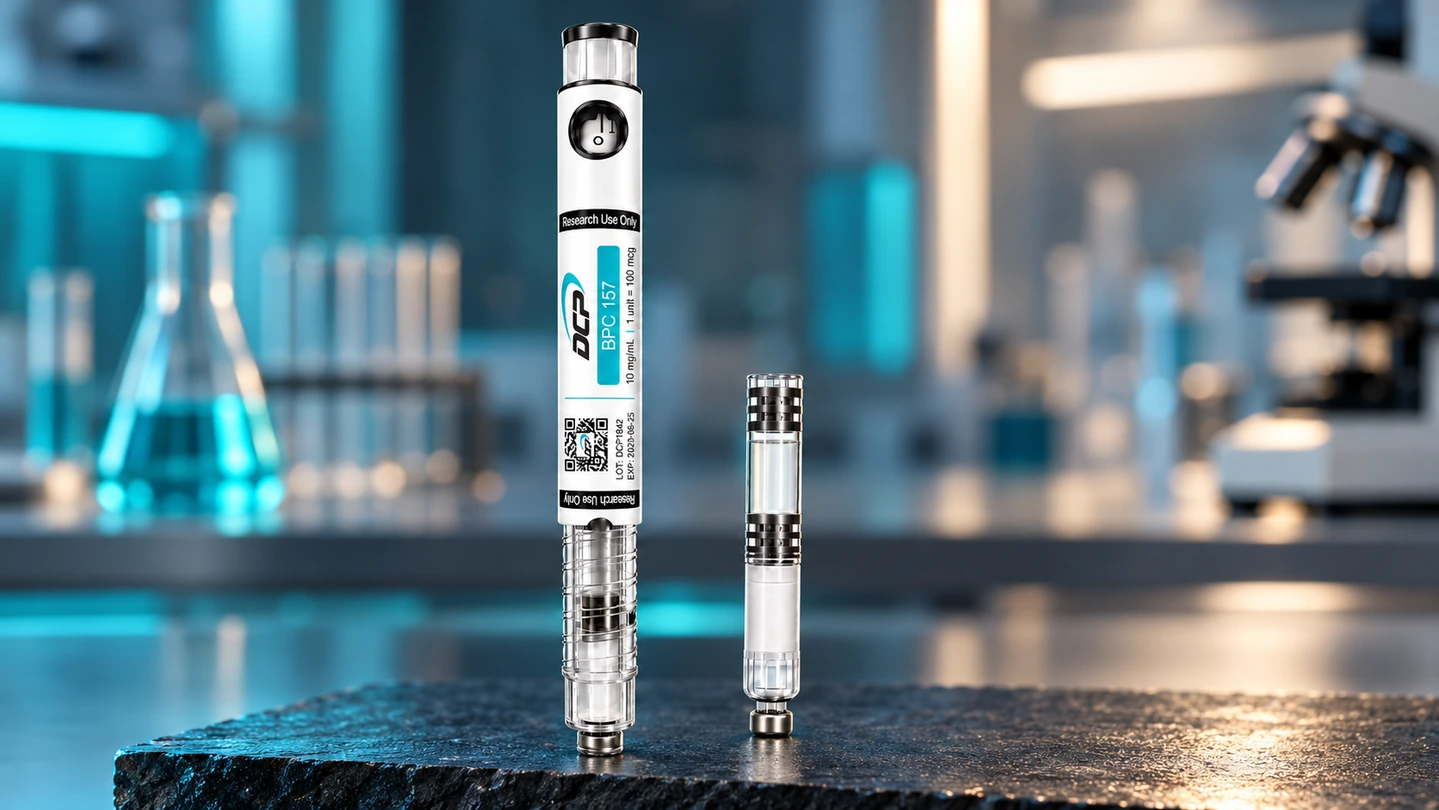
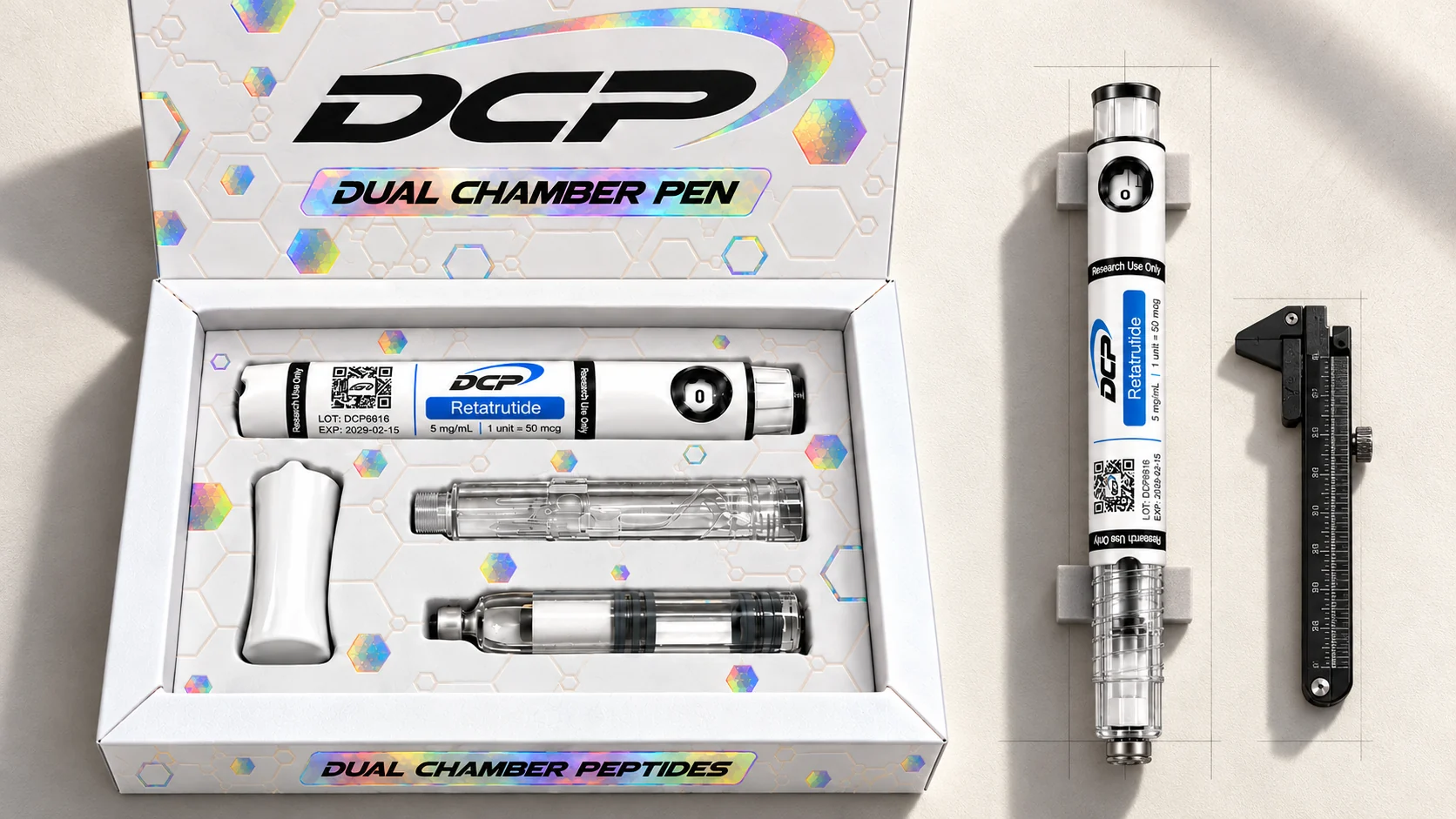
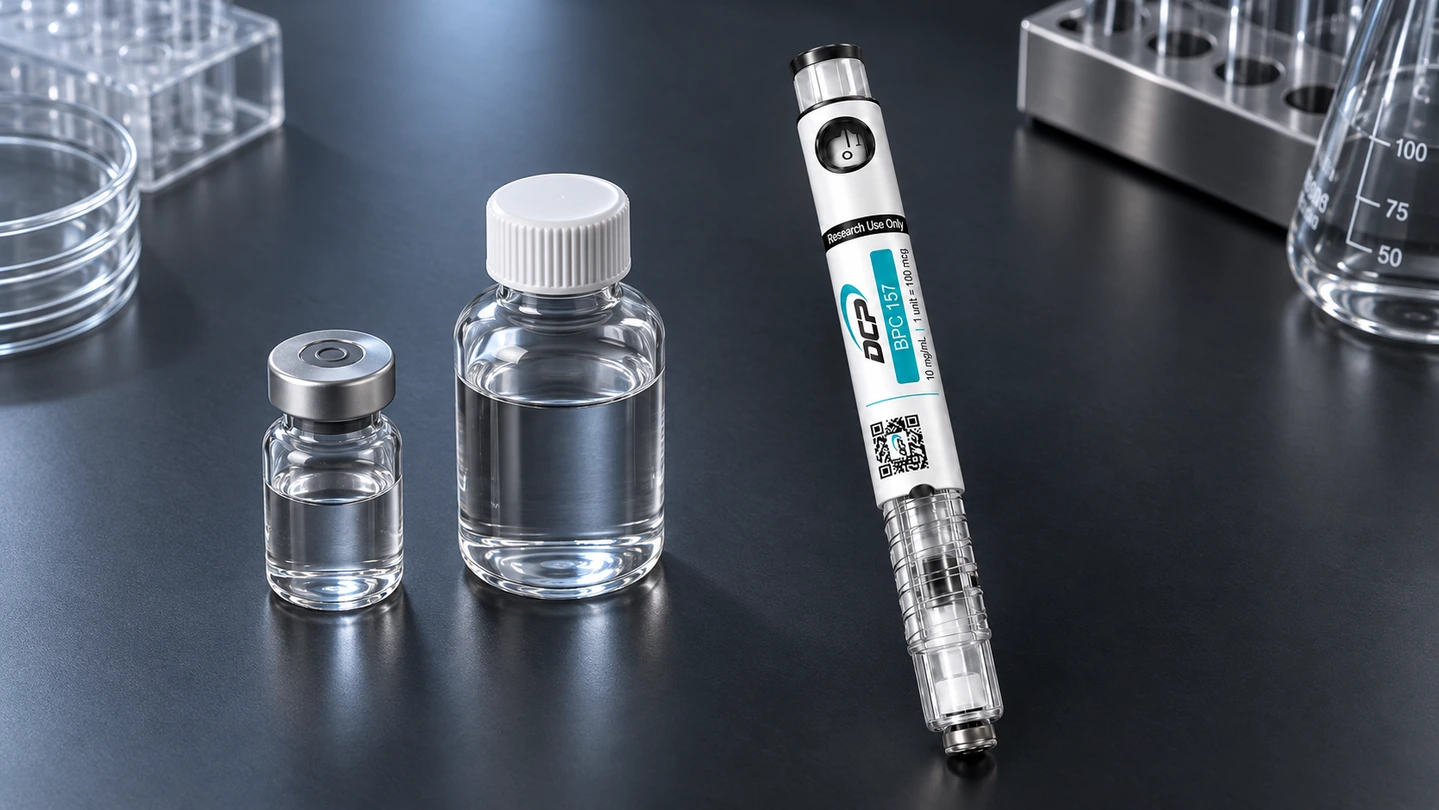
Lyophilized research material can reach the laboratory in a conventional glass vial or in a dual chamber cartridge. The material inside can be the same; what differs is the number of items involved and the handling steps around reconstitution.
Items involved
| Aspect | Conventional vial | Dual chamber cartridge |
|---|---|---|
| Dry material | Separate vial | Front chamber of the cartridge |
| Solvent | Separate container, sourced and labelled separately | Rear chamber of the same cartridge |
| Transfer of solvent | Manual transfer between containers | Inside the closed cartridge through the bypass |
| Labelling | Each container labelled on its own | One label with name, strength, lot and expiry |
Glass manufacturers make the same comparison: administering a lyophilized product traditionally needs a vial of lyophilizate, a diluent container and a transfer device, while a double chamber cartridge combines them in one system. See SCHOTT Pharma.
Workflow differences
In a vial workflow, the researcher chooses the solvent, measures its volume and transfers it. That gives flexibility, but every step must be recorded: which solvent, which volume, which lot.
In a cartridge workflow, the solvent and its volume are set when the cartridge is filled. There are fewer handling steps and fewer items to track, but less flexibility: the proportion cannot be changed afterwards.
Which format suits which research setting
- A conventional vial suits protocols that need a specific solvent or a variable volume.
- A dual chamber cartridge suits protocols that value a fixed, pre-defined combination and fewer separate items.
- In both cases, results depend on the material itself, which is described only by its batch-specific laboratory report.
Neither format is better in every situation. The choice depends on the protocol, not on the packaging alone.
Research use only
Dual Chamber Peptides products are supplied for laboratory research. This article compares packaging workflows. It is not medical advice and does not describe administration to humans or animals.
Research Disclaimer
This article is for informational and research purposes only. The content is not intended as medical advice, diagnosis, or treatment recommendation.