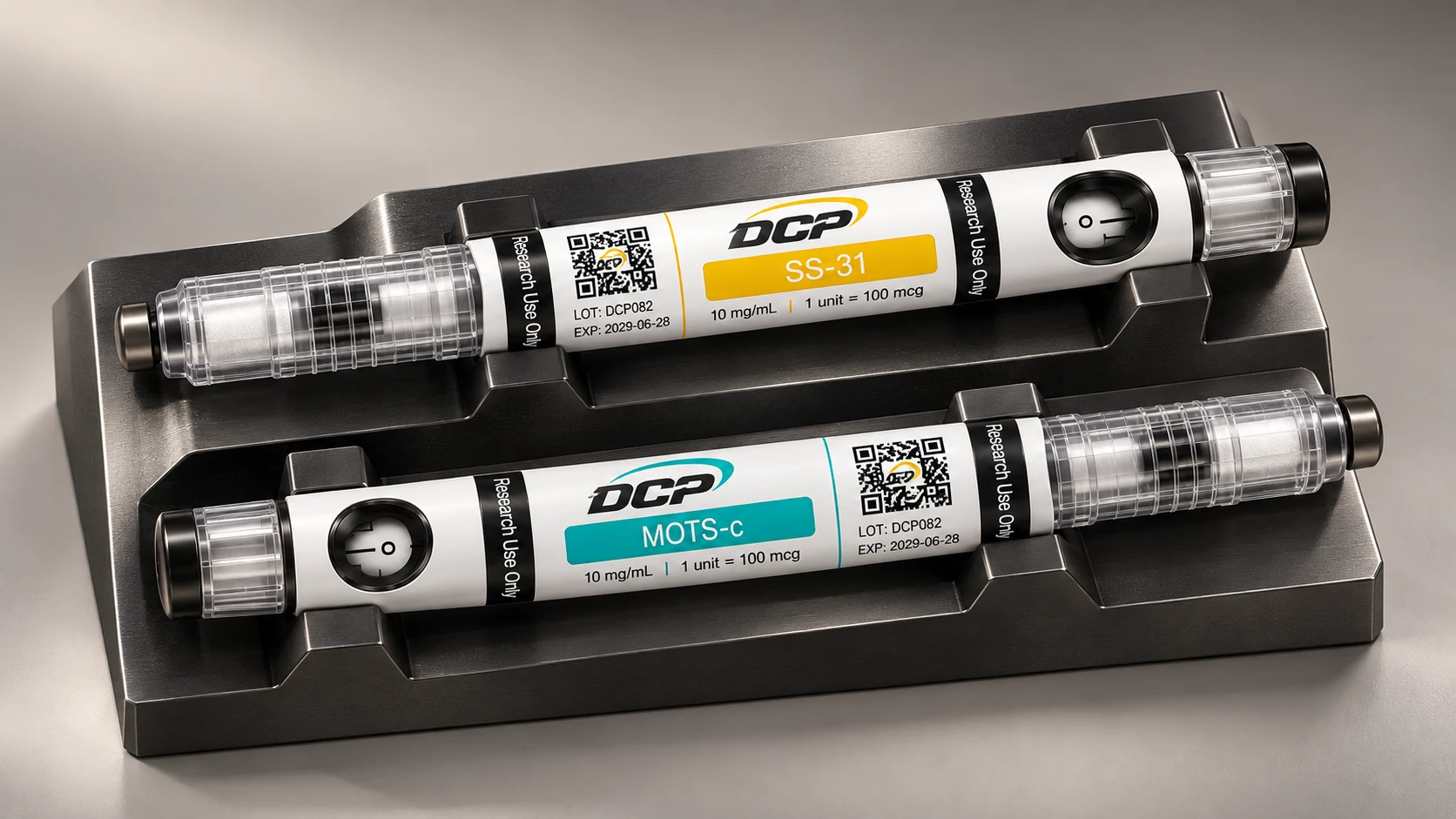

The Importance of Comprehensive Testing: Purity, Amount, Endotoxin and Sterility
One percentage cannot tell the whole story
A laboratory report can show excellent purity and still leave important questions unanswered. How much of the named peptide was measured? Were bacterial endotoxins assessed? Was a sterility test performed?
These are different questions, not several ways of describing the same result. A useful quality review connects each claim to a suitable test, an identifiable sample and a report that can be checked independently.
The scope of a report varies by product, sample and batch. Check the report for the relevant batch rather than assuming that every certificate contains every test described here.
The checks at a glance
| Test | Main question | What it does not establish by itself |
|---|---|---|
| Purity | How much of the detected chromatographic signal is attributed to the main component under this method? | The amount present or sterility |
| Amount | How much of the named peptide was measured in the sample? | Purity or microbiological quality |
| Endotoxin | What bacterial endotoxin activity was detected under the stated test conditions? | Absence of living microorganisms |
| Sterility | Was microbial growth detected under the specified test conditions? | An absolute guarantee for every unit, or absence of endotoxins |
Identity is also fundamental: the laboratory must establish what substance is being measured.
1. Purity: understand what the percentage measures
HPLC separates components before they reach a detector. In an area-normalised purity result, the main peak is compared with the integrated peaks detected under that particular method. A percentage is not a universal inventory of everything in a sample, and a high purity percentage does not demonstrate that the stated number of milligrams is present.
For the techniques themselves, read Why Purity Matters: HPLC and Mass Spectrometry. Analytical procedures must be fit for the question they answer; see ICH Q2(R2), published by EMA.
2. Amount: milligrams are a separate measurement
Amount testing measures the quantity of the identified compound. The weight of a powder is not automatically the weight of its peptide content, and a printed label is not a measured result. Look for the actual value and its units, and check what was submitted.
3. Endotoxin: not the same as sterility
Bacterial endotoxins originate from the outer membrane of Gram-negative bacteria and can remain after bacteria are no longer viable. A value reported as below a limit means below that limit under the test conditions, not an absolute zero. See FDA questions and answers on pyrogen and endotoxin testing.
4. Sterility: valuable evidence with defined limits
A sterility test examines whether viable microorganisms grow under the specified test conditions. The result belongs to the samples tested. It cannot prove that every unit in an entire batch is sterile, and sterility does not mean endotoxin-free.
How to review a certificate in five steps
- Match the sample name, strength and batch to the material being evaluated.
- Verify the report number directly with the issuing laboratory.
- Identify exactly which tests were requested and which results are actually reported.
- Read the units, methods, reporting limits and any comments.
- Record missing information as not reported, then seek clarification before relying on the claim.
Frequently asked questions
Does high purity prove the correct amount is present?
No. Purity and amount answer different questions. Review both measurements.
Does a laboratory logo mean every test was performed?
No. The requested analyses and recorded results determine a report's scope. Check the actual certificate.
Do these tests establish suitability for human use?
No. Dual Chamber Peptides materials are supplied for laboratory research. This article explains testing; it is not medical advice or a dosing guide.
The takeaway: choose evidence that can be checked
Comprehensive testing is valuable because different checks complement one another. Start with the laboratory reports library, verify the relevant document, and evaluate what it shows and what it leaves unanswered.
Research Disclaimer
This article is for informational and research purposes only. The content is not intended as medical advice, diagnosis, or treatment recommendation.