TB-500 and thymosin beta-4: check the sequence before the claim
A presentation name is not a molecular specification
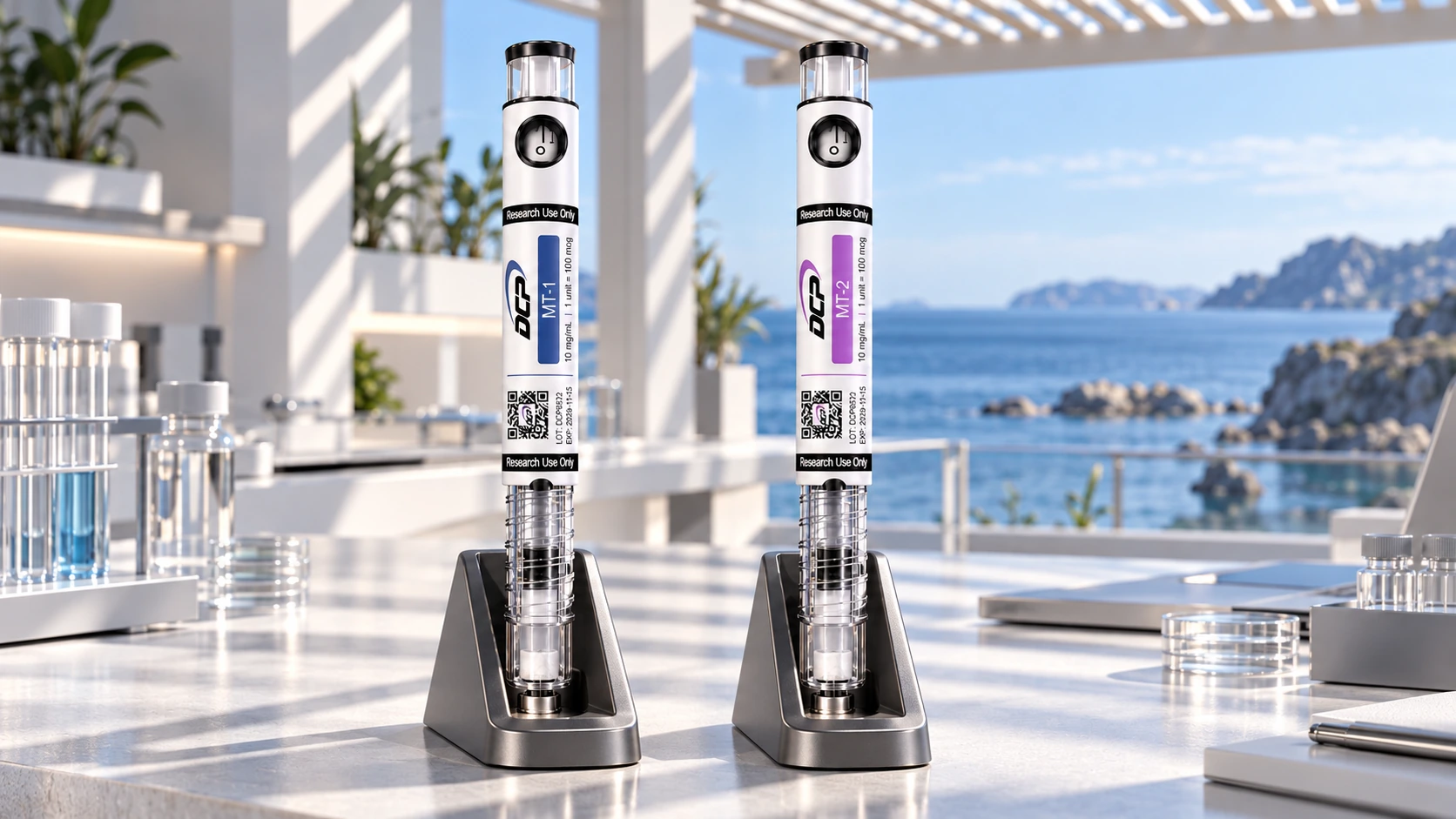
A cartridge or vial labeled TB-500 identifies how a material is presented, but the name alone does not establish its amino-acid sequence. Before comparing a material with a paper, establish its amino-acid sequence, any terminal modifications and the analytical evidence for its identity. A name shared by two listings does not prove that the materials are chemically identical.
This distinction matters because full-length thymosin beta-4 and a shorter thymosin-derived fragment are different research subjects. The FDA assessment identifies LKKTETQ as the fragment called TB-500. That assessment supplies regulatory context; it does not validate the identity, performance or clinical effects of a particular packaged product.
What the actin paper establishes—and what it bypasses
In a classic experiment, Sanders and colleagues studied full-length synthetic thymosin beta-4 by microinjecting it into living epithelial and fibroblast cells. They examined actin stress fibers and observed their disassembly. This supported a role for the tested peptide in the control of actin assembly inside cells.
The experiment is valuable precisely because its question was narrow. It connected a defined material, direct intracellular exposure and a visible cellular endpoint. It did not establish that an unspecified shorter fragment produces the same effect, or that changing stress fibers translates into successful tissue repair.
Direct microinjection also bypassed delivery barriers. Neither a cartridge format nor a matching product name demonstrates that a preparation will reach the intracellular location examined in that experiment. Distribution and cellular access remain separate evidence questions.
Identity, formulation and delivery need different evidence
Identity asks what molecule is present. Sequence information, modifications and analytical results must be consistent with the intended material. A chromatographic area percentage alone cannot establish that identity, nor can it establish mass content, sterility or endotoxin status.
Formulation asks about the material in its actual vehicle and container. Compatibility, chemical integrity and any proposed storage period require measurements on the relevant preparation under defined conditions. A packaging design is not itself a stability result. These are questions for product-specific evidence, not conclusions supplied by a thymosin beta-4 cell experiment.
Delivery asks how much material leaves the presentation and what exposure follows. Nominal labeled content, delivered quantity and biological exposure are distinct measurements. Even a well-characterized formulation cannot inherit evidence for tissue access from an experiment that placed a different molecule directly inside cells. The testing guide provides further context on keeping analytical questions separate.
Keep the biological conclusion attached to the material
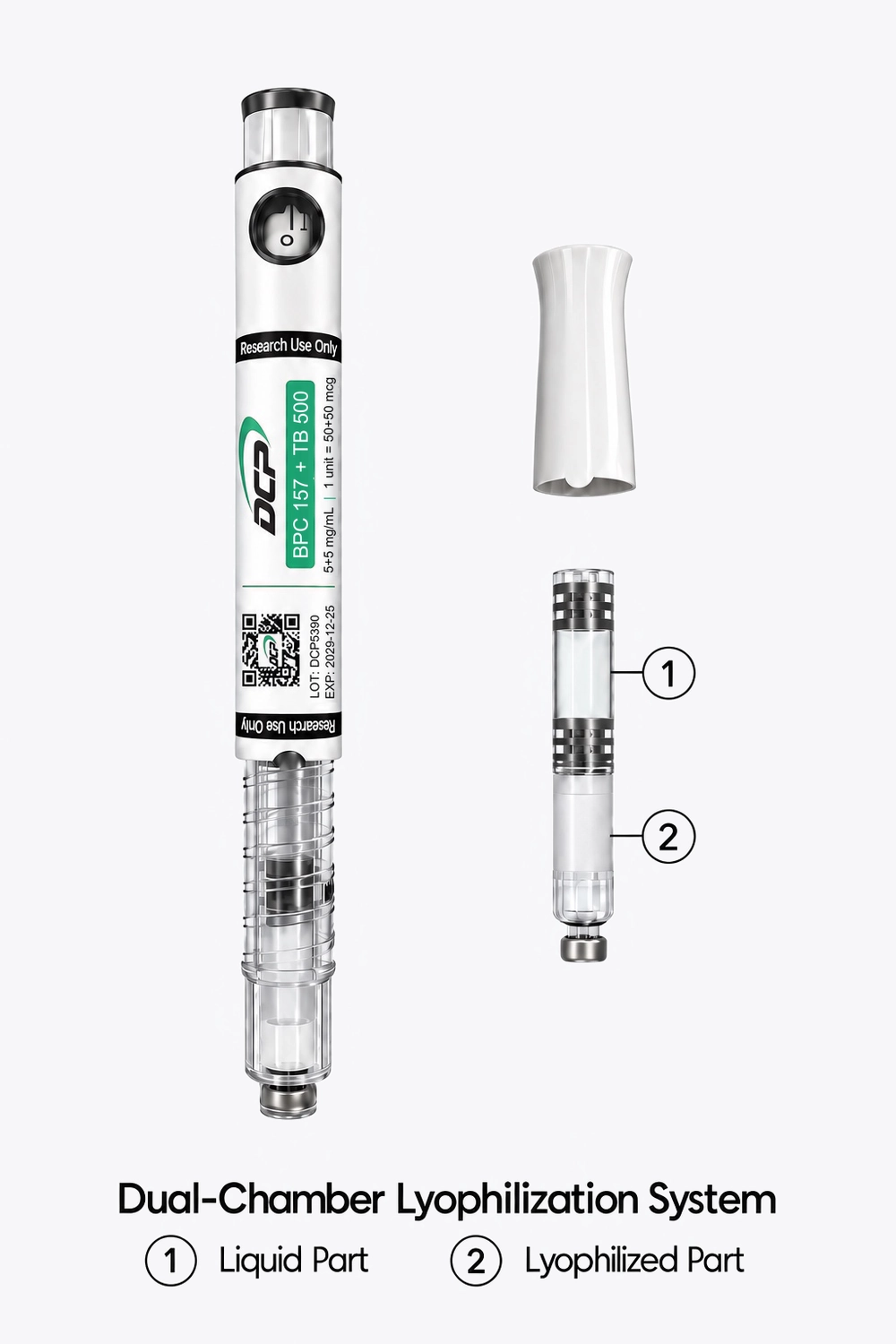
Moving from actin regulation to tendon, cardiac or whole-body repair requires additional studies of the relevant molecule and outcome. Adding another research compound does not close that gap: discussion of BPC-157 alongside TB-500 is not evidence of synergy, formulation compatibility or a clinical advantage.
The useful conclusion is not that packaging is unimportant. It is that packaging, molecular identity and biological activity need their own evidence. None can substitute for the others.
Explore the Products from This Article
All products are >99% purity, manufactured in a certified EU laboratory, with accompanying lab analysis.
Research Disclaimer
This article is for informational and research purposes only. The content is not intended as medical advice, diagnosis, or treatment recommendation.